
01
CAPS Safety Layer
Training includes mindset and procedures around the Cirrus Airframe Parachute System as an additional emergency option.

Course Pathway
Precision under pressure. Procedures that hold in real weather.
Theory
150 hours
Flight Training
50 hours
Typical Duration
3-6 months
Course Overview
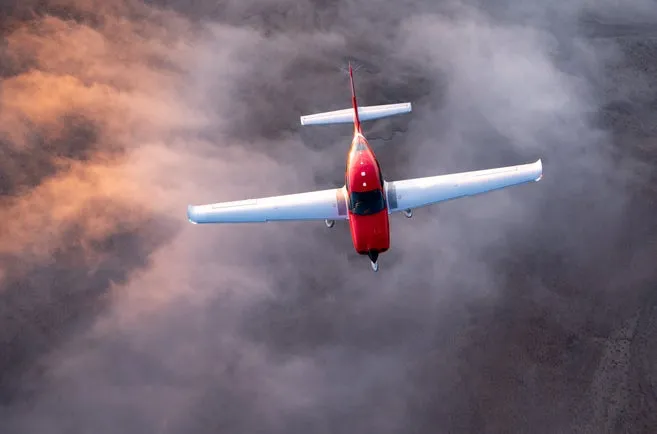
IR prepares you to navigate and control the aircraft primarily by instruments when external visual references are limited by weather or darkness. You learn IFR procedures, route structure, and precision flying standards.
Who It's For
For pilots who want weather and distance to stop being limitations.
What You Walk Away With
Fly with precision in real conditions: clouds, low visibility, longer routes, year-round.
Entry Requirements
What You Will Build
01
Instrument scan, aircraft control, and procedural flying with high accuracy.
02
Use of radio navigation aids, approach procedures, and IFR routing logic.
03
Decision-making and risk management in changing meteorological conditions.
Your Training Path
Each stage is designed to build real capability at a pace that respects your time and challenges your ambition.
Procedures, charts, weather theory, airspace regulations — the intellectual backbone of IFR flying. Dense, rewarding, and the kind of knowledge that separates a fair-weather pilot from a serious one.
Fly the aircraft with zero outside references. Trust the panel. Scan, interpret, act. This is where you discover a new level of focus — and a calm you did not know you had.
VOR, ILS, GPS approaches — the highway system of the sky. You learn to navigate it with surgical accuracy, communicating with ATC like a professional.
Descend through cloud layers and find the runway. The most demanding and satisfying skill in aviation. When you break out of the clouds on centerline, you will understand why pilots chase this feeling.
File a flight plan, fly in real weather, land on the other side. Your world just got dramatically bigger — regardless of the forecast. Business trips, weekend escapes, all year round.
Simulated failures, complex scenarios, examiner standards. We do not prepare you to survive the test. We prepare you to own it — and to fly with the confidence of someone who has seen it all in training.
Safety Framework
01
Training includes mindset and procedures around the Cirrus Airframe Parachute System as an additional emergency option.
02
Briefing discipline, checklist habit, and scenario-based repetition build consistent, reliable pilot behavior.
03
Class 2 — Private Pilots
Standard aviation medical exam by a certified AME. Assesses general health, vision, and hearing.
Class 1 — Commercial Pilots
Comprehensive exam with additional cardiovascular and psychological assessment.